Biography
Early Years
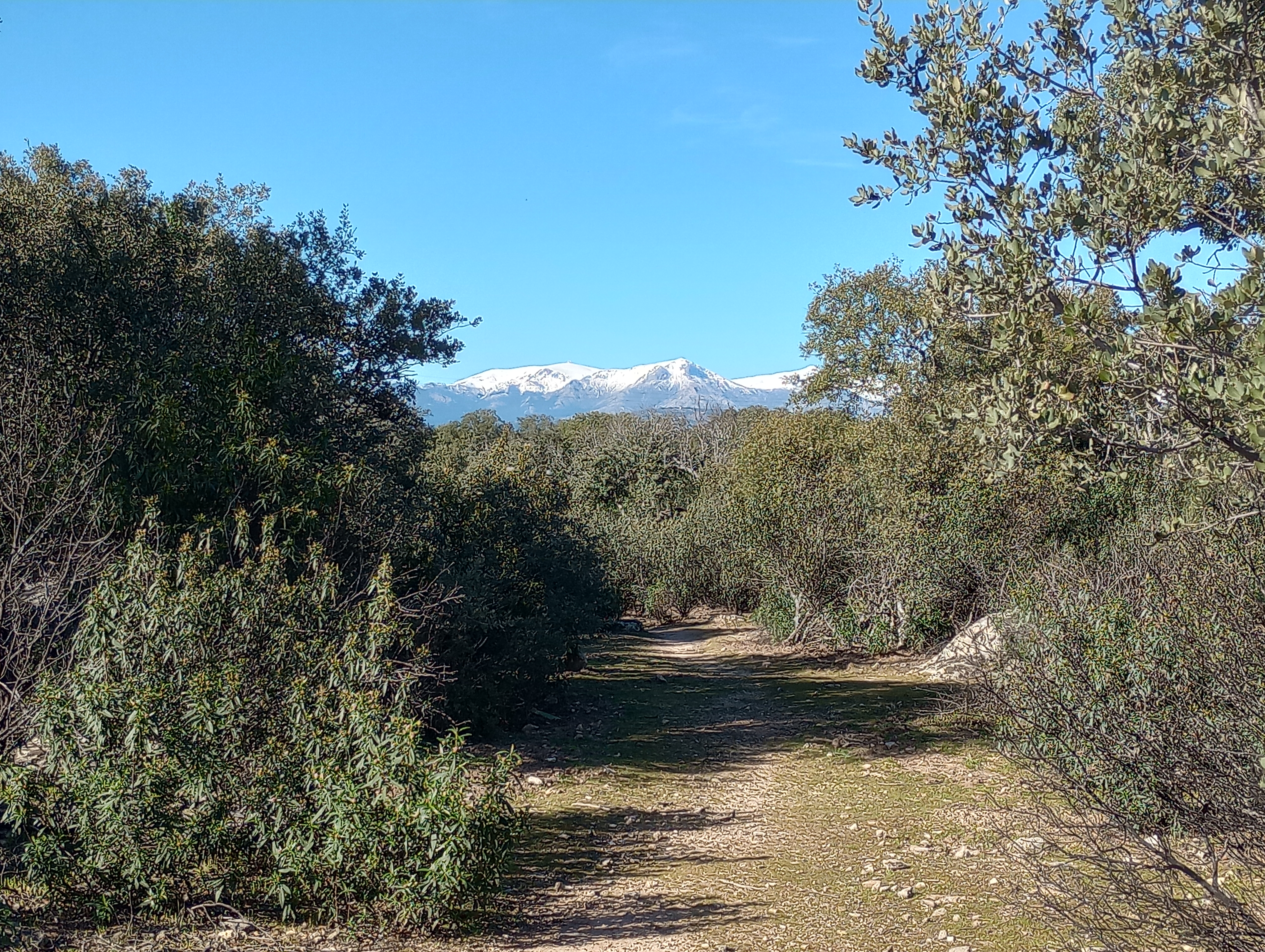
I grew up in a small town in Madrid, Spain, close to the Guadarrama Mountains and the Royal Site of San Lorenzo de El Escorial. I went through the local primary and secondary public schools and did well enough to keep teachers and parents happy. As I remember it now, I decided very early that I wanted to be a biologist. I also realised (eventually) that it was not the easiest or most lucrative path, but the decision stuck, and I enrolled in a Biology degree at the Universidad Autónoma de Madrid. In my final years, while most of my classmates drifted toward biomedicine or biotechnology, I followed the trail of plants. I completed my degree in 2010 and finished a Master’s in Biodiversity at the same university the following year.
By the time I completed the Master’s, I was set on pursuing a PhD, but doing so in Spain proved more complicated than expected. I only had one non-negotiable condition: a salary. For three years I applied for grants and scholarships from Spanish organisations and foundations, with little success. My CV was growing, but my grades were not the "out-of-this-world" scores that Spanish funding bodies seem to require (the situation is even more dramatic nowadays).
Fortunately, while accumulating rejection letters, I gained practical experience by joining several conservation biology and data-management projects.
The D.Phil.
In 2013, after accepting that a funded PhD in Spain was unlikely, I started looking abroad. Eventually, I was offered a PhD position in the Department of Plant Sciences at the University of Oxford.
I arrived in Oxford on 29 September 2014. I wrote about my early days in the city, in Spanish, in a book published a few years later. As a PhD student, I joined the Interdisciplinary Bioscience DTP programme: a four-year programme with two three-month rotation projects, an internship—which I completed at the International Potato Center in Lima, Peru—and, of course, the main doctoral research.
In Oxford, the degree is called a D.Phil., Doctor Philosophiæ. I carried out mine under the supervision of Robert Scotland, then lecturer and now Professor of Systematic Botany. My thesis focused on the systematics of the genus Ipomoea and on the origin and evolution of the sweet potato, Ipomoea batatas (L.) Lam. I received leave to supplicate from the University in 2019, proudly becoming the first Doctor in my family.
Alongside my research on Ipomoea and the sweet potato, I took part in a wide range of science communication and outreach activities. I also travelled to several countries (Peru, the United States, France, China) for fieldwork, technical training, seminars, and conferences.

2019–2022
The work I carried out during my doctorate went well beyond the chapters that ended up in the thesis. That extra ground formed the backbone of a project proposal we submitted to the British Biotechnology and Biological Research Council (BBSRC) to continue the sweet potato research. The proposal was funded, giving us a three-year project and providing the support for my postdoctoral position.
In 2020, the Consortium of European Taxonomic Facilities awarded me the first E-SCoRe award for excellence in research based on natural science collections.
I was also elected president of The Systematics Association for the period November 2021 to January 2025. During these years, alongside the Ipomoea and sweet potato work, I continued to take part in a broad range of science-communication and outreach activities, keeping one foot in research and the other in the outside world.

2023–Present
In 2023, I returned to Spain supported by a Ramón y Cajal research position, which enabled me to establish an independent research line and create a small research group at the Universidad Complutense de Madrid. Our work focuses on plant systematics, phylogenomics, and the reconstruction of neglected crop histories, with particular emphasis on tropical plants.
We have expanded ongoing research on Acalypha in Africa, integrating morphology, genomics, and spatial data to lay the foundations for a global study of the genus. We have also strengthened the work on Ipomoea with more data and new results, modernising workflows for genome data assembly, target-capture datasets, and population-level analysis.
I have contributed to the creation of a new Master’s in Botany, the only one of its kind in Spain, and developed teaching guides for courses on plant phylogeny and phylogeography, nomenclature and classification, and genome analysis. I am also advancing a broader research agenda on tropical plants domesticated for their underground organs, bringing together taxonomy, evolutionary biology, and crop history.
